
問題
第5問は17:30から
第5問は問27から問33の7問です。
最初に講義を聞き、問27から問32に答えなさい。次に続きを聞き、問33に答えなさい。
状況
あなたはアメリカの大学で、幸福感についての講義を、ワークシートにメモを取りながら聞いています。
ワークシート
問27 ワークシートの空欄( 27 )に入れるのに最も適当なものを、四つの選択肢のうちから一つ選びなさい。
- a sustainable development goal beyond
- a sustainable economy supporting
- a sustainable natural environment for
- a sustainable society challenging
問28~31 ワークシートの空欄( 28 )~( 31 )に入れるのに最も適切なものを、六つの選択肢のうちから一つずつ選びなさい。選択肢は2回以上使ってもかまいません。
1. goods
4. everywhere
2. relationships
5. indoors
3. tasks
6. outdoors
問32 講義の内容と一致するものはどれか。最も適切なものを、四つの選択肢のうちから一つ選びなさい。
- Danish people are against high taxes to maintain a standard of living.
- Danish people spend less money on basic needs than on socializing.
- Danish people’s income is large enough to encourage a life of luxury.
- Danish people’s welfare system allows them to live meaningful lives.
問33 講義の続きを聞き、下の図から読み取れる情報と講義全体の内容からどのようなことが言えるか、最も適切なものを、四つの選択肢のうちから一つ選びなさい。
- People in Danmark do less overtime work while maintaining their productivity.
- People in Denmark enjoy working more, even though their income is guaranteed.
- People in OECD countries are more productive because they work more overtime.
- People in the US have an expensive lifestyle but the most time for leisure.
解説 問27~32

What is happiness? Can we be happy and promote sustainable development? Since 2012, the World Happiness Report has been issued by a United Nations organization to develop new approaches to economic sustainability for the sake of happiness and well-being. The reports show that Scandinavian countries are consistently ranked as the happiest societies on earth. But what makes them so happy? In Denmark, for example, leisure time is often spent with others. That kind of environment makes Danish people happy thanks to a tradition called “hygge,” spelled H-Y-G-G-E. Hygge means coziness or comfort and describes the feeling of being loved.
幸福とは何でしょうか? 私たちは幸せになりながら持続可能な開発を促進できるのでしょうか? 2012年以来、幸福と健康のために経済的持続可能性への新しいアプローチを開発するために、国連組織が世界幸福度報告書を発行しています。報告書によると、スカンジナビア諸国は一貫して地球上で最も幸せな社会としてランク付けされています。しかし、なぜ彼らはそんなに幸せなのでしょうか? たとえばデンマークでは、余暇は他の人と一緒に過ごすことが多いです。そのような環境は、H-Y-G-G-Eと綴られる「hygge」と呼ばれる伝統のおかげでデンマーク人を幸せにします。hygge は居心地の良さや快適さを意味し、愛されているという気持ちを表現します。
This word became well-known worldwide in 2016 as an interpretation of mindfulness or wellness. Now, hygge is at risk of being commercialized. But hygge is not about the material things we see in popular images like candlelit rooms and cozy bedrooms with hand-knit blankets. Real hygge happens anywhere—in public or in private, indoors or outdoors, with or without candles. The main point of hygge is to live a life connected with loved ones while making ordinary essential tasks meaningful and joyful.
この言葉は、マインドフルネスやウェルネスの解釈として2016年に世界中でよく知られるようになりました。現在、hygge は商業化される危険にさらされています。しかし、hygge は、キャンドルの灯る部屋や手編みの毛布が置かれた居心地の良い寝室など、人気のイメージで見られる物質的なものではありません。本当の hygge は、公共の場所でもプライベートな場所でも、屋内でも屋外でも、キャンドルがあってもなくても、どこでも起こります。hygge の要点は、日常の基本的な作業を有意義で楽しいものにしながら、愛する人々とつながった生活をすることである。
Perhaps Danish people are better at appreciating the small, “hygge” things in life because they have no worries about basic necessities. Danish people willingly pay from 30 to 50 percent of their income in tax. These high taxes pay for a good welfare system that provides free healthcare and education. Once basic needs are met, more money doesn’t guarantee more happiness. While money and material goods seem to be highly valued in some countries like the US, people in Denmark place more value on socializing. Nevertheless, Denmark has above-average productivity according to the OECD.
デンマーク人は、基本的な必需品について心配する必要がないため、生活の小さな「hygge」なものを大切にするのが得意なのかもしれません。デンマーク人は、収入の 30 ~ 50 パーセントを喜んで税金として支払っています。この高い税金は、無料の医療と教育を提供する優れた福祉制度の費用に充てられています。基本的なニーズが満たされると、お金が増えても幸せが増えるとは限りません。米国など一部の国ではお金や物の価値が高いようですが、デンマークの人々は社交にもっと価値を置いています。それでも、OECD によると、デンマークの生産性は平均以上です。
解説 問27
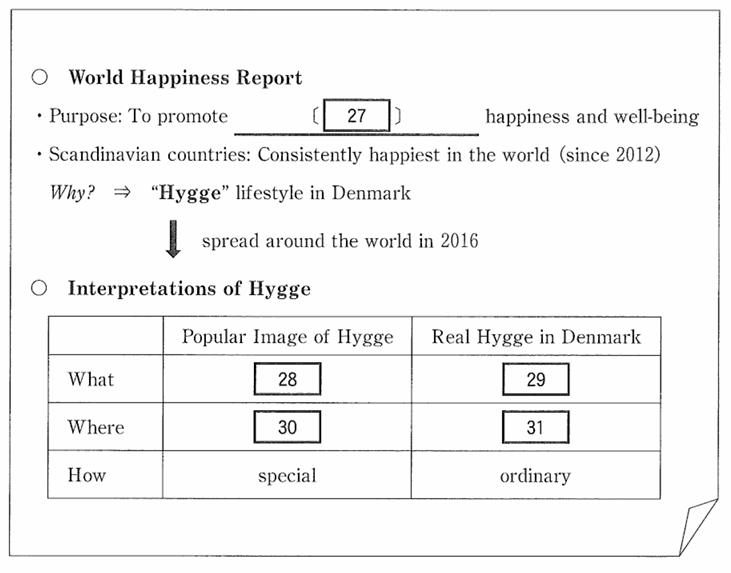
( 27 )はワークシートの「World Happiness Report」の「Purpose / 目的」の項目にあります。
To promote ( 27 ) happiness and well-being
幸福で満足な生活( 27 )を促進すること
選択肢を確認しましょう。
1. a sustainable development goal beyond
…を超えて持続可能な開発
2. a sustainable economy supporting
…を支える持続可能な経済
3. a sustainable natural environment for
…のための持続可能な自然環境
4. a sustainable society challenging
…に挑戦する持続可能な社会
講義でこう言っています。
Since 2012, the World Happiness Report has been issued by a United Nations organization to develop new approaches to economic sustainability for the sake of happiness and well-being.
2012年以来、幸福で満足な生活を目的に、経済的持続可能性への新しいアプローチを開発しようと、国連組織が世界幸福度報告書を発行しています。
「economic sustainability for the sake of happiness and well-being / 幸福で満足な生活のための経済的持続可能性」と言っています。
ということで、正解は「2」です。

選択肢を確認したとき、「sustainable / 持続可能な」が目につくと思います。そこで、何を持続させようとしているのかを意識しながら講義を聞くと、「economic sustainability / 経済的持続可能性」が耳に残りやすくなるかも。
解説 問28~31
( 28 )~( 31 )はワークシートの「Interpretations of Hygge」の表にあります。
〇Interpretations of Hygge
| Popular Image of Hygge | Real Hygge in Denmark | |
| What | ( 28 ) | ( 29 ) |
| Where | ( 30 ) | ( 31 ) |
| How | special | ordinary |
選択肢を確認しましょう。
1. goods / 物
2. relationships / 関係
3. tasks / 仕事
4. everywhere / あらゆる場所
5. indoors / 屋内
6. outdoors / 屋外
「hygge の一般的なイメージ」について、講義でこう言っています。
But hygge is not about the material things we see in popular images like candlelit rooms and cozy bedrooms with hand-knit blankets.
しかし、hygge は、キャンドルの灯る部屋や手編みの毛布が置かれた居心地の良い寝室など、人気のイメージで見られる物質的なものではありません
つまり hygge は「the material things / 物質的な物」のイメージがあると言っています。( 28 )に入るのは「1」の「goods / 物」です。
また「rooms / 部屋」「bedrooms / 寝室」と言っています。( 30 )に入るのは「5」の「indoor / 屋内」です。
「hygge の本当の姿」について、講義でこう言っています。
Real hygge happens anywhere—in public or in private, indoors or outdoors, with or without candles.
本当の hygge は、公共の場所でもプライベートな場所でも、屋内でも屋外でも、キャンドルがあってもなくても、どこでも起こります。
「Real hygge happens anywhere / 本当の hygge はどこでも起こります」と言っています。( 31 )は「4」の「everywhere / あらゆる場所」です。
そしてこう続きます。
The main point of hygge is to live a life connected with loved ones while making ordinary essential tasks meaningful and joyful.
hygge の要点は、日常の基本的な作業を有意義で楽しいものにしながら、愛する人々とつながった生活をすることである。
「The main point of hygge is to live a life connected with loved ones / hygge の要点は愛する人たちとつながった生活すること」と言っています。( 29 )は「2」の「relationship / 関係」です。
ということで、正解は( 28 )→「1」、( 29 )→「2」、( 30 )→「5」、( 31 )→「4」です。
最初の方でも、デンマーク人は「leisure time is often spent with others / 余暇は他の人とよく過ごす」と言っていました。そこで hygge の正しいイメージができていると、話が理解しやすかったかもしれませんね。
解説 問32
講義の内容と一致するものを選択肢から選ぶ問題です。選択肢を確認しましょう。
1. Danish people are against high taxes to maintain a standard of living.
デンマーク人は、生活水準を維持するために高い税金を課すことに反対しています。
2. Danish people spend less money on basic needs than on socializing.
デンマーク人は、社交よりも基本的なニーズにお金をかけません。
3. Danish people’s income is large enough to encourage a life of luxury.
デンマーク人の収入は、贅沢な生活を促すのに十分な額です。
4. Danish people’s welfare system allows them to live meaningful lives.
デンマーク人の福祉制度は、彼らが有意義な生活を送ることを可能にしています。
講義でこう言っています。
Perhaps Danish people are better at appreciating the small, “hygge” things in life because they have no worries about basic necessities.
デンマーク人は、基本的な必需品について心配する必要がないため、生活の小さな「hygge」なものを高く評価する傾向があるのかもしれません。
なぜ「基本的な必需品について心配する必要がない」のかと言うと、デンマークの税金は収入の「30%~50%」あると言っています。そしてその税金について講義でこう言っています。
These high taxes pay for a good welfare system that provides free healthcare and education.
この高い税金は、無料の医療と教育を提供する優れた福祉制度の費用に充てられています
つまりデンマーク人は、「a good welfare system / 優れた福祉制度」があるため、hygge な生活ができているということです。
ということで、正解は「4」です。
直接正解を選ぶのは難しいと思います。税金の話はしていたけれど、それに反対なんてしていない。「1」は違うなぁ。「2」なんて話はあったかなぁ。お金があるから hygge な生活ができるって話でもなかった。「3」は違うかなぁ。みたいな感じで消去法で選ぶことになるのではないでしょうか。
解説 問33
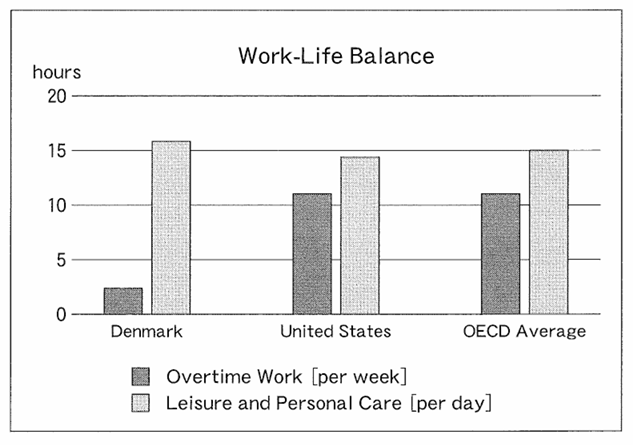
Here’s a graph based on OECD data. People in Denmark value private life over work, but it doesn’t mean they produce less. The OECD found that beyond a certain number of hours, working more overtime led to lower productivity. What do you think?
こちらは OECD のデータに基づくグラフです。デンマークの人々は仕事よりも私生活を重視していますが、生産性が低いというわけではありません。OECD は、一定時間を超える残業が増えると生産性が低下することを発見しました。あなたはどう思いますか?
図と講義の内容から当てはまるものを選択肢から選ぶ問題です。選択肢を確認しましょう。
1. People in Danmark do less overtime work while maintaining their productivity.
デンマークの人々は、生産性を維持しながら残業を減らしています。
「生産性」について、講義でこう言っています。
Denmark has above-average productivity according to the OECD.
OECD によると、デンマークの生産性は平均以上です。
デンマークの生産性は平均以上あると言っています。
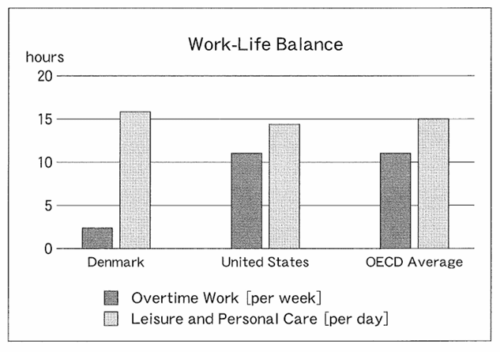
またグラフによると、デンマークの残業はOECD平均よりもかなり少ないです。つまりデンマークは生産性を維持しながら残業を減らしています。この選択肢が正解です。
2. People in Denmark enjoy working more, even though their income is guaranteed.
デンマークの人々は、収入が保証されているにもかかわらず、仕事をより楽しんでいます。
講義でこう言っています。
These high taxes pay for a good welfare system that provides free healthcare and education.
この高い税金は、無料の医療と教育を提供する優れた福祉制度の費用に充てられています
「医療」と「教育」は無料ですが、収入が保証されているわけではありません。またグラフによると、デンマークの人は仕事よりもレジャーを重視しているようです。
この選択肢は違います。
3. People in OECD countries are more productive because they work more overtime.
OECD加盟国の人々は、残業が多いため、生産性が高いです。
講義の続き部分でこう言っています。
working more overtime led to lower productivity.
残業が増えると生産性が低下する
選択肢とは逆の内容です。またOECD以外のグラフがありませんから、OECDの人々の残業が多いのかどうかはわかりません。この選択肢は違います。
4. People in the US have an expensive lifestyle but the most time for leisure.
米国の人々は、生活費はかかりますが、余暇に最も多くの時間を費やしています。
「米国」について、講義でこう言っています。
While money and material goods seem to be highly valued in some countries like the US,
米国など一部の国ではお金や物の価値が高いようですが
講義の内容は、「お金や物」と「人とのつながり」のどちらに価値を置くかという話で、米国では「お金や物」の方に重きを置いているようだと言っています。「an expensive lifestyle / 費用のかかるライフスタイル」という話ではありません。
またグラフで米国は、一日15時間ほどの「Leisure and Personal Care」があります。ただそれだけでは、「Leisure」と「Personal Care」の割合がわかりません。よって余暇に最も多くの時間を費やしているとは判断できません。この選択肢は違います。
と言うことで、正解は「1」です。
グラフを見てまず思うのは、「デンマークは残業が少ないなぁ」でしょう。その感覚通り解答すれば、正解できましたね。他の選択肢はグラフからは判断ができません。グラフの意味がないような問題は作らないと考えて、選択肢を消すこともできたかもしれません。
コメントをどうぞ