2026年度の大学入学共通テスト英語第6問の解説をしています。疑問点が残らないよう、解き方の手順も踏まえて一問一問どこよりも丁寧に説明します。
問題
In English class, your teacher has asked you to create an outline of the following story for a class presentation.
The Onigiri Shop
Mitsuki walked to the park near her office and sat on the bench. She was feeling nervous about her presentation in the afternoon. She quickly unwrapped her onigiri, or rice ball, and bit into the salmon filling. She was immediately taken back to a comforting time in her life so many years ago.
◆◆◆◆◆
An old man sold traditional onigiri in a small, one-window shop in an old shopping arcade. Mitsuki, a junior high school kendo club member, often bought onigiri on her way home after practice. This shop was popular because it sold the best homemade tuna-filled onigiri in town. Mitsuki always bought one. The old man never said much and neither did Mitsuki.
One day, Mitsuki noticed an old black-and-white photo of a young man in kendo gear on the wall of the shop. She thought the old man might be a kendo fan. She wanted to talk to him about kendo but could not work up the courage to do so.
On a Friday afternoon, after a long practice, she had to carry home not only her kendo shinai, or bamboo sword, but also the rest of the equipment needed for the tournament the next day. She was starving, so she went to buy her regular onigiri. When she got home, she realized that she did not have her shinai. “Oh no! Where did I leave it? At the onigiri shop?” In a panic, Mitsuki ran out of her house and retraced her steps back to the onigiri shop. It was closed! She banged on the window shutter. “Excuse me, could you please open up?”
The old man opened the side door of the shop. He held out her shinai. “I found it outside the shop,” he said. “Thank you so much. I need it for the tournament tomorrow,” Mitsuki said. The old man murmured under his breath, “Never lose sight of yours. I never lost sight of mine.” He shut the door before Mitsuki could utter another word.
The next morning, Mitsuki stopped by the onigiri shop. “I’ll need to keep up my energy today,” she thought. She bought the regular onigiri and said, “Thank you for keeping my shinai yesterday.” The old man just nodded.
At the tournament, Mitsuki sat down for her mid-morning break. She opened the bag, and to her surprise, she discovered two onigiri inside. One was her regular tuna-filled onigiri and the other was salmon-filled. She eagerly ate both. Later in the afternoon, she won her match. Although her team did not win, it was the best she had ever done.
Mitsuki rushed toward home. She wanted to tell the onigiri man about her performance at the tournament. The shop window was shuttered. She banged on it. “Hello, hello? Is anyone there?” A young man looked out of the side door. “Can I help you?” he said. This man looked vaguely familiar. She thought she had seen him somewhere before. Then Mitsuki asked, “Where is the onigiri man?” The young man said, “On, my father didn’t feel well this afternoon and is in the hospital, just for a few days.” Feeling sad, Mitsuki walked slowly home.
Mitsuki sat in the kitchen and thought about the old man. Then it hit her. “He’s the man in the photo! That’s why the young man looked familiar!” Mitsuki began writing a note.
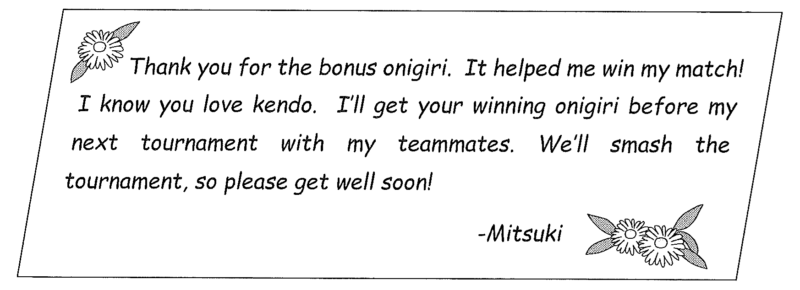
“Could you please give this to your father?” she asked the young man the next day.
Mitsuki continued practicing kendo throughout junior high school and kept buying her favorite tuna onigiri after practice. On tournament days, the old man gave her a salmon one as well. And as always, the old man just nodded. “Good luck,” he murmured.
◆◆◆◆◆
Salmon onigiri always gave Mitsuki renewed energy. She walked back to her office with a spring in her step, ready to smash her presentation.
問1 Choose the best option for ( 24 ) and ( 25 ).
- appeared unfriendly and sometimes seemed rude
- gifted two tuna-filled onigiri to Mitsuki on tournament day
- kept the shop open although he had few customers
- practiced kendo when he was in his youth
- ran his business with his son a disorganized way
問2 Choose four out of the five options (1~5) and put them in the order they happened in Mitsuki’s life.
- Mitsuki did well at her match on the tournament day.
- Mitsuki wrote a message to the son of the old man.
- The old man found Mitsuki’s shinai left outside of his shop.
- The old man secretly gave Mitsuki an extra onigiri.
- The salmon-filled onigiri reminded Mitsuki of her youth.
問3 Choose the best option for ( 30 ).
- began a weekly routine of making onigiri for the team
- built a friendship with Mitsuki by exchanging notes
- chatted with Mitsuki whenever she visited his shop
- showed kindness not with words but with his actions
問4 Choose the best option for ( 31 ).
- kendo career ended because of the advice of the old man
- memories about onigiri influenced her later in life
- performance at the kendo tournament led to a team victory
- presentation went well because she ate a tuna-filled onigiri
解説 問1
Choose the best option for ( 24 ) and ( 25 ).
( 24 )と( 25 )について最適な選択肢を選びなさい。
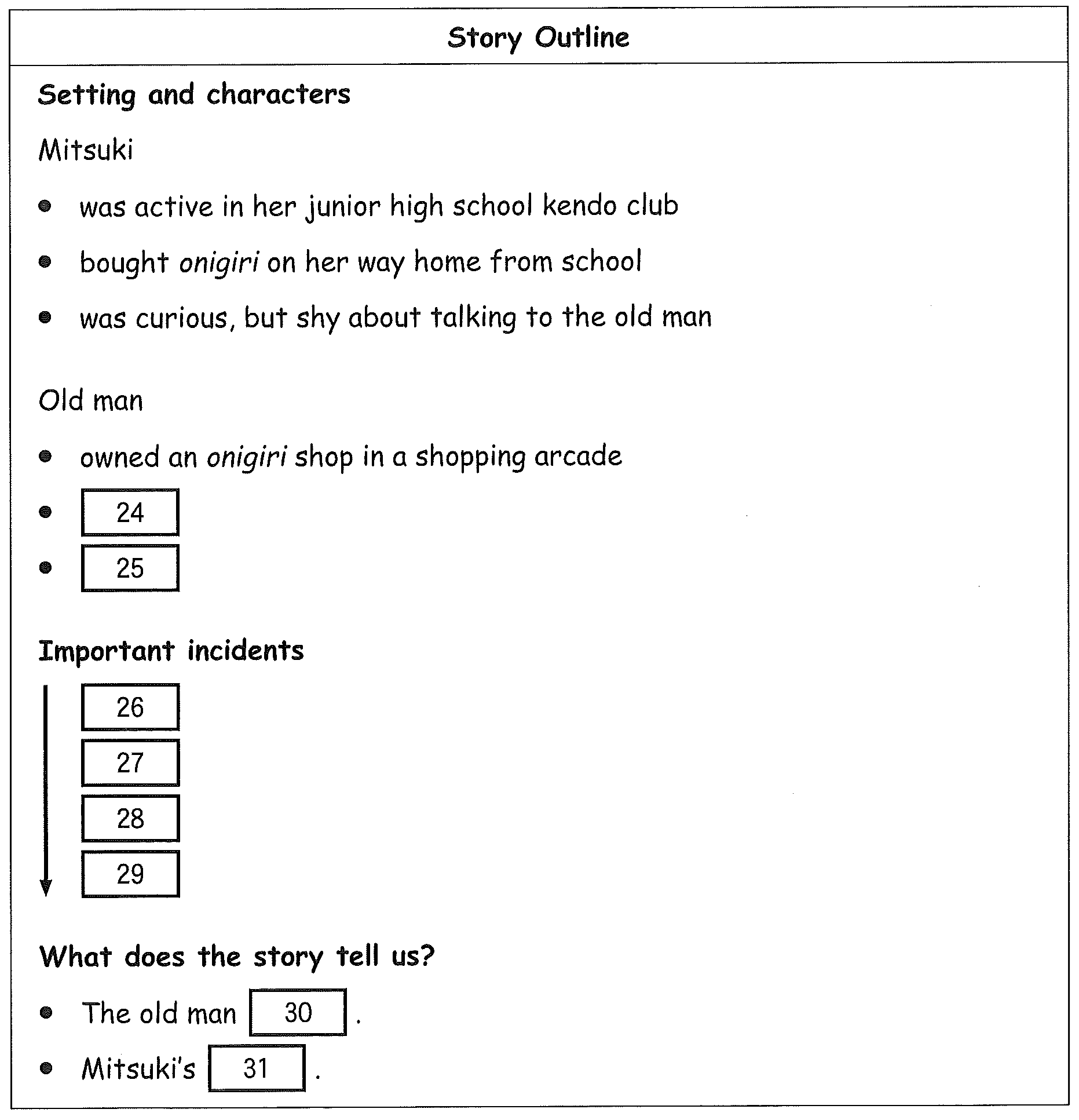
( 24 )と( 25 )は Story Outline の「Setting and characters / 設定とキャラクター」の Old man の項目にあります。
Old man
・owned an onigiri shop in a shopping arcade
・( 24 )
・( 25 )
「おにぎり屋」の老人のキャラクターについて、正しく書かれてある選択肢を選ぶ問題ですね。それを踏まえて、選択肢を確認しましょう。
1. appeared unfriendly and sometimes seemed rude
不愛想に見えて、時には無礼に思えた
第二段落にこうあります。
The old man never said much
老人はほとんど口をきかなかった
また第五段落にこうあります。
He shut the door before Mitsuki could utter another word.
ミツキが何の言葉も口に出せないうちに、老人はドアを閉めました。
おにぎり屋の老人は、寡黙で職人肌の人なんでしょう。見方によっては愛想が悪く、無礼に感じるかもしれませんね。この選択肢は正しいです。
2. gifted two tuna-filled onigiri to Mitsuki on tournament day
大会当日、ミツキにツナ入りおにぎりを2つ贈った
第七段落にこうあります。
She opened the bag, and to her surprise, she discovered two onigiri inside. One was her regular tuna-filled onigiri and the other was salmon-filled.
袋を開けると、なんとおにぎりが2つ入っていた。一つはいつものツナ入り、もう一つはサーモン入りだった
おにぎりは2つ入っており、一つはツナ入りでした。しかしもう一つはサーモン入りです。この選択肢は違います。
3. kept the shop open although he had few customers
客が少ししかいなかったにもかかわらず店を開け続けた
第二段落にこうあります。
This shop was popular because it sold the best homemade tuna-filled onigiri in town.
この店は、町で一番美味しい手作りのツナ入りおにぎりを売っていることで人気があった。
人気の店ですから、客が少なくはありません。この選択肢は違います。
4. practiced kendo when he was in his youth
若い頃は剣道をしていた
第三段落にこうあります。
One day, Mitsuki noticed an old black-and-white photo of a young man in kendo gear on the wall of the shop.
ある日、ミツキは店の壁に、剣道着を着た若い男性の古い白黒写真がかかっているのに気づいた。
また第九段落にこうあります。
“He’s the man in the photo! That’s why the young man looked familiar!”
「彼が写真の男性だ! だから、あの若い男の人に見覚えがあったんだ!」
つまりおにぎり屋の老人は、若いときに剣道をしていたことがわかります。この選択肢は正しいです。
5. ran his business with his son a disorganized way
息子と一緒に無秩序なやり方で経営していた
おにぎり屋の老人が入院したとき、家から息子が出てきました。しかし、店は締めていました。ということは親子でおにぎり屋をやっているのではなさそうです。また「a disorganized way / 無秩序なやり方」なんて話はありません。この選択肢は違います。
ということで、正解は「1」と「4」です。

「1」は見方によっては、別にそうは思えないという人もいるでしょう。ただ正解以外の選択肢はあり得ないものです。消去法で選ぶのが実践的でしょうね。
解説 問2
Choose four out of the five options (1~5) and put them in the order they happened in Mitsuki’s life.
5つの選択肢(1~5)から4つを選び、ミツキの人生で起こった順に並べなさい。
第一段落にこうあります。
She quickly unwrapped her onigiri, or rice ball, and bit into the salmon filling. She was immediately taken back to a comforting time in her life so many years ago.
彼女は急いでおにぎりの包みを開け、入っている鮭にかじりついた。彼女はたちまち、何年も前の心安らぐ時間に引き戻された。
これは選択肢「5」の内容です。
5. The salmon-filled onigiri reminded Mitsuki of her youth.
鮭の入ったおにぎりは、ミツキの幼い頃を思い出させた。
第五段落にこうあります。
The old man opened the side door of the shop. He held out her shinai. “I found it outside the shop,” he said.
老人は店の横のドアを開け、彼女の竹刀を差し出しました。「店の外で見つけたんだ」と彼は言いました。
これは選択肢「3」の内容です。
3. The old man found Mitsuki’s shinai left outside of his shop.
老人は店の外に置き忘れられたミツキの竹刀を見つけた。
第七段落にこうあります。
She opened the bag, and to her surprise, she discovered two onigiri inside.
袋を開けると、なんとおにぎりが2つ入っていた。
これは選択肢「4」の内容です。
4. The old man secretly gave Mitsuki an extra onigiri.
老人はこっそりミツキにおにぎりを一つ余分にあげた。
第七段落の続きにこうあります。
Later in the afternoon, she won her match.
午後遅く、ミツキは試合に勝利した。
これは選択肢「1」の内容です。
1. Mitsuki did well at her match on the tournament day.
ミツキは大会当日の試合で良い成績を収めた。
「ミツキの人生で起こった順に並べる」という問題でした。最初に出てきた、選択肢「5」の鮭の入ったおにぎりを食べて、ミツキの幼い頃を思い出させたという話は、現在の話です。そしてそこから過去の話になります。つまり「5」が、ミツキの人生では一番最後に起こったことになります。
ということで、正解は「3」→「4」→「1」→「5」です。
ちなみに余った選択肢「2」はこうです。
2. Mitsuki wrote a message to the son of the old man.
ミツキは老人の息子にメッセージを書いた。
第九段落にこうあります。
“Could you please give this to your father?” she asked the young man the next day.
「これをお父さんに渡していただけませんか?」と、ミツキは翌日、若い男に頼んだ。
メッセージを書きましたが、それは老人に向けてであって、その息子に対してのものではありません。この選択肢は違います。
物語に出来事として出てきた順では「5」→「3」→「4」→「1」です。しかし「ミツキの人生で起こった順に並べる問題」なのでそれでは間違いになります。「◆」の区切りで「現在」→「過去」→「現在」となっていて、本編が回想シーンになっていることに注意ですね。
解説 問3
Choose the best option for ( 30 ).
( 30 )に最適な選択肢を選びなさい。
( 30 )は Story Outline の What does the story tell us? の項目にあります。
What does the story tell us?
・The old man ( 30 ).
おにぎり屋の老人について、正しい選択肢を選ぶ問題です。それを踏まえて、選択肢を確認しましょう。
1. began a weekly routine of making onigiri for the team
チームのためにおにぎりを作るのが毎週の慣例になった。
おにぎり屋の老人にあてた手紙にこうあります。
I’ll get your winning onigiri before my next tournament with my teammates.
次のチームメイトと一緒に出る大会の前に、あなたの勝利のおにぎりをもらうつもりです。
また第十段落にこうあります。
On tournament days, the old man gave her a salmon one as well.
そのうえ試合の日には、老人はサーモンおにぎりもくれた。
試合のある日には、ミツキはサーモンおにぎりをもらっています。しかしそれはミツキに対してのものであって、チームのために作っているわけではなさそうです。またそれは試合ごとであって、毎週の慣例になっているという話はありません。この選択肢は違います。
2. built a friendship with Mitsuki by exchanging notes
ミツキとメモを交換して友情を築いた。
ミツキはおにぎり屋の老人にメモを送りましたが、老人からミツキにメモが送られたという話はありません。この選択肢は違います。
3. chatted with Mitsuki whenever she visited his shop
ミツキが彼の店を訪れるたびに、彼女とおしゃべりをした。
第十段落にこうあります。
And as always, the old man just nodded. “Good luck,” he murmured.
そしていつものように、老人はただ頷いて「頑張れ」と呟いた。
店に訪れるたびにおしゃべりするという話はありません。この選択肢は違います。
4. showed kindness not with words but with his actions
言葉ではなく行動で優しさを示した。
第七段落にこうあります。
She opened the bag, and to her surprise, she discovered two onigiri inside.
袋を開けると、なんとおにぎりが2つ入っていた。
何も言わずにおまけのおにぎりを入れるというのは、おにぎり屋の老人の優しさでしょう。この選択肢が正解です。
ということで、正解は「4」です。
ほとんどしゃべらないおにぎり屋の老人が、「Good luck」と言ってくれるようになりました。ですが、これは「chat / おしゃべり・雑談」ではありませんね。「4」は直接選びにくい選択肢ですが、消去法で他の選択肢を消すことができそうです。
解説 問4
Choose the best option for ( 31 ).
( 31 )に最適な選択肢を選びなさい。
( 31 )は Story Outline の What does the story tell us? の項目にあります。
What does the story tell us?
・Mitsuki’s ( 31 ).
ミツキについて、正しい選択肢を選ぶ問題です。それを踏まえて、選択肢を確認しましょう。
1. kendo career ended because of the advice of the old man
(ミツキの)剣道のキャリアは老人の助言によって終わりを迎えた
第五段落にこうあります。
The old man murmured under his breath, “Never lose sight of yours. I never lost sight of mine.”
老人は小声で言いました。「決して見失ってはいけない。私は一度も自分のものを見失ったことはない」
これが老人のアドバイスになるのでしょうか。剣道の竹刀を忘れていったことに対して、注意した言葉のようですが、もっと深い意味があるような気がしないでもないです。考えすぎですかね。
ただこのアドバイスによって、ミツキの剣道のキャリアは終わってしまったのでしょうか。
第十段落にこうあります。
Mitsuki continued practicing kendo throughout junior high school
ミツキは中学校を通して、剣道の練習をし続けました
中学校の間、剣道を続けています。ミツキの剣道のキャリアは終わっていません。この選択肢は違います。
2. memories about onigiri influenced her later in life
(ミツキの)おにぎりの思い出が彼女のその後の人生に影響を与えた
第十一段落にこうあります。
Salmon onigiri always gave Mitsuki renewed energy.
サーモンおにぎりはいつもミツキに新たな活力を与えてくれた。
何か辛いことやくじけそうなことがあったら、サーモンおにぎりを食べて、やる気を取り戻していたのでしょう。この選択肢が正解です。
3. performance at the kendo tournament led to a team victory
(ミツキの)剣道大会での活躍が、チームの勝利につながった
第七段落にこうあります。
Although her team did not win, it was the best she had ever done.
チームは勝てなかったが、ミツキのこれまでで最も良かった。
チームは負けています。この選択肢は違います。
4. presentation went well because she ate a tuna-filled onigiri
ツナ入りおにぎりを食べたおかげで、(ミツキの)プレゼンテーションがうまくいった
第十一段落にこうあります。
Salmon onigiri always gave Mitsuki renewed energy. She walked back to her office with a spring in her step, ready to smash her presentation.
サーモンおにぎりはいつもミツキに新たな活力を与えてくれた。彼女は軽やかにオフィスへ戻り、プレゼンテーションを完璧にこなす準備をしていた
プレゼンテーションはこれからなので、まだ行っていません。そもそもミツキが食べたのはサーモン入りのおにぎりであって、ツナ入りおにぎりではありません。この選択肢は違います。
ということで、正解は「2」です。
「2」も直接選びにくい選択肢ですが、その他が明らかに間違った選択肢です。消去法で解答するのが実践的でしょう。「4」の選択肢が二重に間違っているのが、ちょっと面白いですね。
コメントをどうぞ