問題
第5問は16:53から
第5問は問27から問33の7問です。
最初に講義を聞き、問27から問31に答えなさい。次に問32と問33の音声を聞き、それぞれの問いに答えなさい。
状況
あなたは、大学で水産学に関する科目を履修していて、一連の活動(活動1, 2, 3)に取り組んでいます。
活動1
あなたは、ワークシートにメモを取りながら、講義を聞いています。
ワークシート
A New Way of Fish Farming
The new type of water has ( 27 ).
Conventional methods
Freshwater fish farming:
Saltwater fish farming:
( 28 ) in Southeast Asian countries
highly ( 29 ) world wide
Advantages of the new type of water
- Saltwater fish can be raised in landlocked countries.
- Fish growth is faster.
- Fish health is ( 30 ).
- It can be ( 31 ) for plant farming.
問27 ワークシートの空欄( 27 )に入れるのに最も適切なものを、四つの選択肢のうちから一つ選びなさい。
- been part of fish farming for 30 years
- been used for fish farming in seawater
- less nutrition than fresh water
- less salt content than seawater
問28~31 ワークシートの空欄( 28 )~( 31 )に入れるのに最も適切なものを、六つの選択肢のうちから一つずつ選びなさい。同じ選択肢を2回以上使ってもかまいません。
1. experiment
4. researched
2. improved
5. reused
3. profitable
6. widespread
活動2
あなたは、講義の要約を書く準備をしています。グループのメンバーA, B と口頭で内容を確認しています。
問32 それぞれの発言が講義の内容と一致するかどうかについて、最も適切なものを四つの選択肢のうちから一つ選びなさい。
- A の発言のみ一致する
- B の発言のみ一致する
- どちらの発言も一致する
- どちらの発言も一致しない
活動3
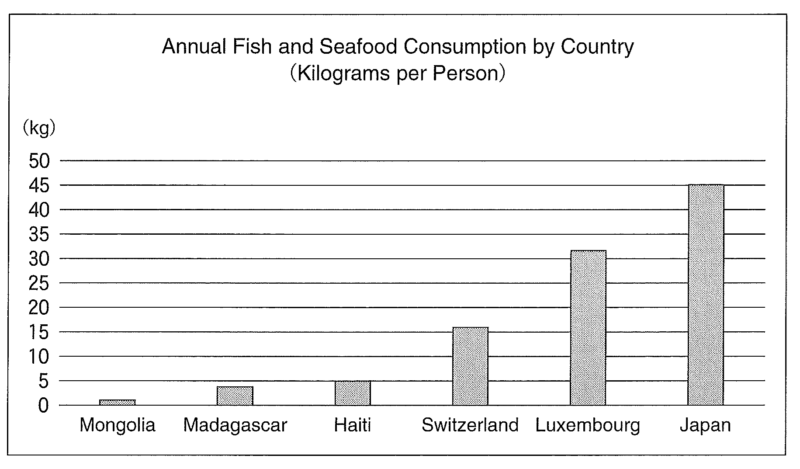
あなたは、Joe と May との三人で、後の図表を見ながら、講義の内容についてディスカッションの準備をしています。
問33 講義、Joe と May の会話及び図表の内容からどのようなことが言えるか、最も適切なものを、四つの選択肢のうちから一つ選びなさい。
- Because of the new water, fish and seafood consumption is higher in Switzerland than Mongolia.
- Fish farming with the new water could increase fish and seafood consumption even in countries like Luxembourg.
- In countries with high fish and seafood consumption, fish can be raised using water that has grown tomatoes.
- Low-GDP island countries consume more fish and seafood than high-GDP landlocked countries.
解説 問27~31

What if there was a way to raise saltwater fish in countries with no access to oceans or seas? Japanese researchers are experimenting with a new type of water in Mongolia and other countries. It is made by adding selected minerals found in seawater to fresh water. The result is a mixture that is lower in salt and mineral content than seawater. Before we dive in deeper, let’s review what we know about fish farming.
海洋や海にアクセスできない国で、海水魚を養殖する方法があったらどうでしょうか? 日本の研究者たちは、モンゴルをはじめとする国々で、新しいタイプの水を使った実験を行っています。これは、海水に含まれる厳選されたミネラルを淡水に添加することで作られます。その結果、海水よりも塩分とミネラル含有量が低い混合水が生まれます。詳細を掘り下げる前に、養殖について私たちが知っていることをおさらいしましょう。
Fish farming is an important part of global efforts to fight food shortages. While freshwater fish farming is common in Southeast Asia, saltwater fish farming has grown rapidly over the past 30 years. Saltwater fish farming, which produces fish such as salmon and tuna, generates great financial rewards in the international market.
養殖は、食糧不足と闘うための世界的な取り組みにおいて重要な役割を果たしています。淡水魚養殖が東南アジアで一般的である一方で、海水魚養殖は過去30年間で急速に成長しました。海水魚養殖はサケやマグロなどの魚を生産し、国際市場で大きな利益を生み出しています。
That’s where the advantages of using this new water come in. In landlocked countries like Mongolia, which have no access to an ocean, raising saltwater fish on inland farms could become a valuable source of income and nutrition for local populations. In fact, even wealthier landlocked countries that already eat a lot of seafood might consume more if fish were raised locally.
まさにここで、この新しい水を利用するメリットが生まれます。モンゴルのように海にアクセスできない内陸国では、内陸の養殖場で海水魚を養殖することは、地域住民にとって貴重な収入源と栄養源となる可能性があります。実際、既に魚介類を多く消費している裕福な内陸国でさえ、魚を地元で養殖すれば、より多くの魚を消費する可能性があります。
Fish raised in this new water grow faster and get fewer deadly diseases than those in the wild. These factors contribute to commercial success.
この新しい水で養殖された魚は、野生の魚よりも成長が早く、致命的な病気にかかる可能性も低いです。これらの要因は商業的な成功に貢献しています。
Furthermore, this new type of water has other benefits. Because of the way it’s made, that same water can be used to grow salt-tolerant plants like tomatoes, instead of being wasted after the fish have been raised. This saves water in areas where water is scarce. More research is needed, but early results show that this special type of water may be the wave of the future.
さらに、この新しいタイプの水には他にも利点があります。その製造方法のおかげで、養殖後に廃棄されることなく、トマトなどの耐塩性植物の栽培に使用できます。これは、水不足の地域で水を節約することにつながります。さらなる研究が必要ですが、初期の結果は、この特別なタイプの水が未来の潮流となる可能性を示しています。
解説 問27
The new type of water has ( 27 ).
この新しいタイプの水は( 27 )
ワークシートの( 27 )に入るものを選ぶ問題です。選択肢を確認しましょう。
1. been part of fish farming for 30 years
30年間養殖の一部だった
2. been used for fish farming in seawater
海水での養殖に使用されてきた
3. less nutrition than fresh water
淡水よりも栄養価が低い
4. less salt content than seawater
海水よりも塩分濃度が低い
講義でこう言っています。
The result is a mixture that is lower in salt and mineral content than seawater.
その結果、海水よりも塩分とミネラル含有量が低い混合水が生まれます。
塩分が海水より低いと言っています。ということで、正解は「4」です。

「the new type of water / 新しいタイプの水」なのに、「1」の「30年間ずっと…」や、「2」の「…に使われていた」という「現在完了」の文は違うかなぁ、と推測できそうです。講義の音声がが流れるまでの時間を使ってその推測ができれば、「the new type of water に含まれる成分量を意識して講義を聞けばよい」と、残りの選択肢から判断できます。
解説 問28~31
Conventional methods / 従来の方法
Freshwater fish farming:
淡水魚養殖:
Saltwater fish farming:
海水魚養殖:
( 28 ) in Southeast Asian countries
東南アジア諸国において( 28 )
highly ( 29 ) world wide
世界でおおいに( 29 )
Advantages of the new type of water / 新しいタイプの水の利点
- Saltwater fish can be raised in landlocked countries.
海水魚が内陸国で養殖できる - Fish growth is faster.
魚の成長が速い - Fish health is ( 30 ).
魚の健康が( 30 ) - It can be ( 31 ) for plant farming.
植物栽培に( 31 )となり得る
ワークシートの空欄( 28 )~( 31 )に入れるものを選ぶ問題です。選択肢を確認しましょう。
1. experimental
実験の
4. researched
研究された
2. improved
改善された
5. reused
再利用された
3. profitable
儲けが多い
6. widespread
広く普及している
( 28 )がある「Freshwater fish farming / 淡水魚養殖」について、講義でこう言っています。
freshwater fish farming is common in Southeast Asia
淡水魚養殖は東南アジアで一般的です
「common / 一般的」ということは、広く普及しています。( 28 )に入るのは「6」の「widespread / 広く普及している」です。
( 29 )がある「saltwater fish farming / 海水魚養殖」について、講義でこう言っています。
Saltwater fish farming, which produces fish such as salmon and tuna, generates great financial rewards in the international market.
海水魚養殖はサケやマグロなどの魚を生産し、国際市場で大きな利益を生み出しています。
「大きな利益を生み出している」ということは、儲かっています。( 29 )に入るのは「3」の「profitable / 儲けが多い」です。
「魚の健康」について、講義でこう言っています。
Fish raised in this new water grow faster and get fewer deadly diseases than those in the wild.
この新しい水で養殖された魚は、野生の魚よりも成長が早く、致命的な病気にかかることが少ないです。
病気にかかりづらくなるということは、魚の健康が改善されたということです。( 30 )に入るのは「2」の「improved / 改善された」です。
「植物の栽培」について、講義でこう言っています。
Because of the way it’s made, that same water can be used to grow salt-tolerant plants like tomatoes, instead of being wasted after the fish have been raised.
その製造方法のおかげで、魚を養殖した後に廃棄されるのではなく、同じ水をトマトのような耐塩性植物の栽培に使用することができる。
養殖で使った「the new type of water」は、廃棄せずに植物栽培にに使うことができます。( 31 )に入るのは「5」の「reused / 再利用された」です。
ということで、正解は( 28 )→「6」、( 29 )→「3」、( 30 )→「2」、( 31 )→「5」です。
講義の音声がが流れるまでの時間を使って、このワークシートと選択肢にはしっかり目を通しておきたいです。「新しいタイプの水の利点」ですから、「魚の健康」については「改善した」が入りそうなのは、講義を聞く前から想定できそうです。
解説 問32

Scientists have invented new minerals that allow freshwater fish to live in seawater.
科学者たちは、淡水魚が海水中で生息できるようにする新しいミネラルを発明しました。

The uses of the new type of water aren’t limited to fish farming.
新しいタイプの水の用途は養殖だけに限りません。
それぞれの発言が講義の内容と一致するかどうかという問題です。
講義でこう言っています。
What if there was a way to raise saltwater fish in countries with no access to oceans or seas?
もし海や海にアクセスできない国で海水魚を養殖する方法があったらどうでしょうか?
「the new type of water」は海水魚の養殖のために作られたのであって、「freshwater fish / 淡水魚」を海水で飼育するためのものではありません。また講義でこうも言っています。
It is made by adding selected minerals found in seawater to fresh water.
これは、海水に含まれる特定のミネラルを淡水に添加することで作られます
海水に含まれるミネラルを添加したのであって、ミネラルを発明したわけではありません。Student A の発言は講義に一致しません。
「the new type of water」の使用目的について、講義でこう言っています。
Because of the way it’s made, that same water can be used to grow salt-tolerant plants like tomatoes, instead of being wasted after the fish have been raised.
その製造方法のおかげで、養殖後に廃棄されることなく、トマトなどの耐塩性植物の栽培に使用することができます。
「the new type of water」は養殖だけでなく、トマトの栽培にも使えます。Student B の発言は講義に一致します。
Student B の発言のみ講義に一致します。ということで、正解は「2」です。
Student A については「invented new minerals」か「freshwater fish to live in seawater」のどちらかが聞き取れればいいです。Student B については「limited to fish farming」は聞き取れそうですが、その直前の「aren’t」の否定の部分が聞き取れなければ、意味が逆になってしまいます。注意しましょう。
解説 問33

Which do you think has the stronger influence on fish consumption, GDP or geography?
魚介類の消費量にGDPと地理のどちらがより大きな影響を与えていると思いますか?

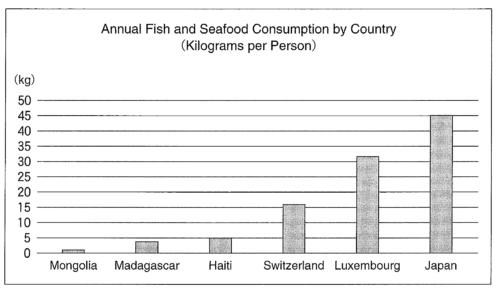
Good question. Switzerland and Luxembourg have no direct ocean access, but this graph shows the consumption of fish and seafood there is comparatively high. Like Japan, they are both higher-GDP countries.
いい質問ですね。スイスとルクセンブルクは直接海に面していませんが、このグラフから、両国の魚介類の消費量が比較的高いことがわかります。日本と同様に、両国ともGDPの高い国です。
Interesting. Madagascar and Haiti are island countries, but there, consumption is relatively low.
興味深いですね。マダガスカルとハイチは島国ですが、消費量は比較的少ないです。
Well, they are both lower-GDP countries, like Mongolia.
モンゴルと同様に、どちらもGDPが低い国です。
講義や、Joe と May の会話の内容、及び図表からどのようなことが言えるかという問題です。選択肢を確認しましょう。
1. Because of the new water, fish and seafood consumption is higher in Switzerland than Mongolia.
この新しい水のおかげで、スイスではモンゴルよりも魚介類の消費量が多くなっています。
グラフによると、確かに Switzerland は Mongolia よりも魚介類の消費が多いです。しかしそれが「the new water」が理由かどうかはこの講義や、グラフだけでは判断できません。この選択肢は違います。
2. Fish farming with the new water could increase fish and seafood consumption even in countries like Luxembourg.
新しい水を使った養殖は、ルクセンブルクのような国でも魚介類の消費量を増やす可能性があります。
Joe の発言のとおり、Luxembourg は内陸国です。「内陸国」について、講義でこう言っています。
In fact, even wealthier landlocked countries that already eat a lot of seafood might consume more if fish were raised locally.
実際、既に魚介類を多く消費している裕福な内陸国でさえ、魚を地元で養殖すれば、より多くの魚を消費できる可能性があります。
「the new water」で海水魚を養殖すれば、より消費を増やす可能性があると言っています。この選択肢が正しいです。
3. In countries with high fish and seafood consumption, fish can be raised using water that has grown tomatoes.
魚介類の消費量が多い国では、トマトを栽培した水を使って魚を養殖することができます。
講義でこう言っています。
Because of the way it’s made, that same water can be used to grow salt-tolerant plants like tomatoes, instead of being wasted after the fish have been raised.
その製造方法のおかげで、養殖後に廃棄されることなく、トマトなどの耐塩性植物の栽培に使用することができます。
トマト栽培の水を養殖に使うのではなく、養殖で使った水をトマト栽培に使います。この選択肢は違います。
4. Low-GDP island countries consume more fish and seafood than high-GDP landlocked countries.
GDPの低い島国は、GDPの高い内陸国よりも多くの魚介類を消費しています。
グラフによると、Madagascar や Haiti はGDPの低い島国ですが、Switzerland や Luxembourg といったGDPの高い内陸国より、魚介類の消費は少ないです。この選択肢は違います。
ということで、正解は「2」です。
「2」は確かに講義で言っている内容と同じですが、正直言ってそんなに細かい話を覚えていられないですよね。「4」はグラフから明らかに違う、「3」は( 31 )ができていれば、その流れでわかります。「1」は上記にあるとおり、それだけでは断定できないと、消去法で絞るのが現実的でしょうか。「could」は「~かもしれない」という「推測」なのにも注目しましょう。
コメントをどうぞ